Highest quality Hermes reps - How many stitches? And is it worth counting?
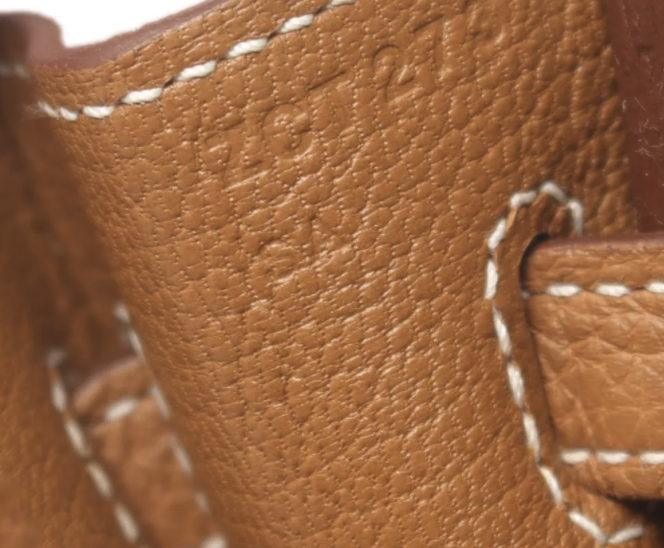
I've come across "guides" for checking Birkin and other Hermes bags more than once where they wrote that the bag has to have a specific number of stitches. People pick this up as absolute truth and now everyone counts stitches on Hermes reps. The problem is it doesn't work that way. On original Hermes the number of stitches varies. Yes, you understood right, it varies. Because each bag is made by a living person by hand, not a robot on an assembly line. One craftsman stitches slightly tighter, he gets 26 stitches on a section. Another craftsman stitches slightly looser, he gets 24 stitches on the same section. Both are correct, both are original Hermes. The difference is in the technique of the specific craftsman, and that's normal.
Moreover, the number of stitches can differ slightly even on one bag. One handle has 24 stitches, the other has 25. Why. Because leather is a natural material, it can stretch or shrink a bit during the work. The craftsman compensates for this by adjusting the stitch density so the overall look stays even. I've seen original Birkins from the boutique where the number of stitches on the handles was off by 2 to 3 from the "standard" that everyone quotes on Reddit. And these were perfect bags straight from Hermes. So why do people still count stitches on reps. Because it's simple, it's understandable, it gives an illusion of control. It's easier to count stitches than to understand leather quality, correct thread tension, evenness of a saddle stitch. People want a simple checklist and stitches feel like exactly that kind of checklist. By the way, the same can be said about engraving, where people scrutinize every grain in the letters, but in reality all of this is done by hand and engraving in this sense is similar to stitches, it's also more "alive" and might not be "perfect" the way you'd want.
But it's a trap. I've seen reps where the number of stitches perfectly matches the original but the stitches themselves are crooked, thread tension is uneven, leather is cheap and so on. The seller simply knows that people count stitches and makes the right number, but doesn't care about the real quality. According to the seller's logic, you need to control the places where clients look, and they don't pay attention to the leather at all, so in 99% of cases with "star sellers" for 1500 to 2500 you get a bag made from Chinese leather. "But at least the stitches are perfect."
You know what actually matters in stitches. Not the quantity but the quality. Here's what you need to look at. Evenness. All stitches should be roughly the same size. Not perfectly identical because it's handwork, but visually even. If stitches jump from small to large, that's bad. Angle of inclination. In saddle stitch the stitches go at roughly a 45 degree angle. This angle should be stable throughout. If the angles jump around, it means either machine work or an inexperienced craftsman. Thread tension. Stitches shouldn't be too tight, where they cut into the leather. And they shouldn't be too loose, where you can see micro loops of thread. Correct tension is when the stitch lies snugly on the leather but doesn't deform it. Clarity of holes. In handwork the holes are first punched with an awl, then stitched. These holes should be even, on one line, the same size. If the holes are ragged or different sizes, it's a sign of rushing or poor tools. Thread. Should be quality waxed thread of the right thickness for the given leather. Thread shouldn't fray, split or have knots. Beginning and end of the seam. Should be neatly secured and hidden. Thread ends shouldn't stick out, no visible knots. On the original the ends are hidden inside the leather or secured with back stitches. Straightness of the seam. The line of stitches should run evenly parallel to the edge. If the seam waves or drifts to the side, it's poor work. And here it doesn't matter whether there are 20 or 30 stitches, if the line is crooked it still looks bad.
All of these parameters are much more important than the exact number of stitches. But checking them is harder, you need an eye and understanding. And counting is easier, so people count. Another point. Even if you counted the "right" number of stitches and are happy, this guarantees nothing. The factory could have specifically done the right number knowing that buyers check this, but used machine stitching disguised as hand stitching. Or an inexperienced craftsman mechanically did 24 stitches but the quality of the seams is bad. I'll tell you more. Some factories specifically vary the number of stitches on reps to seem more authentic. Like, look, we don't have robots sewing, we also have variations. And people see this and think wow, what an accurate copy. Although in reality it's just marketing for the naive.
So what to do instead of counting stitches. Look at the overall picture. Evaluate the quality of the leather and hardware, the overall bag construction. Look at the seams not under a microscope but from a normal distance, are they even, are they neat. Check the bag's symmetry, the correctness of proportions, the quality of the edge finishing. If you want to check the stitches specifically, look at the parameters I described above. Evenness, angle, tension, quality of holes. This will give you much more information than just the quantity. And most importantly, don't make the number of stitches a deal breaker. If the bag is excellent quality, leather is good, hardware is correct, seams are neat, but there are two fewer stitches than in some guide, this is absolutely not a reason to refuse. Because as I explained, even in the originals this varies. On the contrary, if you're offered a bag where there's an "exact number of stitches as in the original" but the leather looks suspicious, the hardware is light, the seams are crooked, don't fall for this marketing. The seller is just playing on your ignorance, trying to distract you from real problems.
If you have questions about how to evaluate stitch quality without counting stitches, write me. Have a good day.